

Brandon & Bretford Community Orchard
Planted for people, pollinators & wildlife
Welcome to our Community Orchard – a little patch of Brandon & Bretford that belongs to everyone.
Created and cared for by the local community, the orchard is a place to enjoy, explore and reconnect with nature. It provides fruit, flowers and valuable habitats for wildlife, while creating a peaceful green space for residents of all ages.
Take a seat, listen to the birds, watch the bees at work and enjoy watching the orchard change through the seasons.
Enjoying the Orchard
We want this to remain a welcoming space for everyone. Please:
-
Take your litter home or use the bin provided.
-
Keep dogs under control.
-
Don't disturb the beehives.
-
Treat the trees, plants and wildlife with care.
-
Leave the orchard as you'd like to find it.
Most importantly, take your time and enjoy it. Sit at one of the benches, listen to the birds, watch the bees, look for what's flowering or fruiting and see how the orchard changes every time you visit.
Brandon & Bretford Community Orchard
Planted for people, pollinators & wildlife.
What's growing in our orchard?

Our Apple Trees
Lord Lambourne - A classic English dessert apple with crisp, juicy flesh and a rich, aromatic flavour.
James Grieve - A wonderfully juicy apple with a distinctive sharp-sweet flavour.
Bramley - One of Britain's best-known cooking apples and a firm favourite for pies, crumbles and baking.
Cox - A classic dessert apple, loved for its aromatic flavour and sweetness.
Worcester Pearmain - A traditional English dessert apple known for its sweet flavour.
Our Pear Trees
Conference Pear - One of Britain's best-loved pears, producing sweet and juicy fruit.


Soft Fruit
Look around the orchard and you'll also find:
-
Currant bushes
-
Gooseberry bushes
-
Blackberry bushes
Meet our bees
The orchard is also home to two beehives.
Bees are enormously important to the orchard. As they travel between flowers collecting nectar and pollen, they pollinate the blossom that will eventually become our apples, pears and other fruits.
The orchard provides them with an important source of food, while the bees help our orchard flourish in return.
If you see our bees at work, enjoy watching them from a respectful distance and please don't disturb the hives.

Listen to the Orchard
Sometimes the easiest way to discover the wildlife around you isn't by looking – it's by listening. The orchard and surrounding field are home to, or regularly visited by, a wonderful variety of birds. Some of the species you may see or hear include:


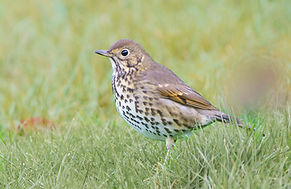
Eurasian Blackcap
Listen for a rich, fluting song, sometimes earning the Blackcap the nickname “northern nightingale.”
Long-tailed Tit
These tiny birds often travel together in lively groups. Rather than a traditional song, listen for their excited, high-pitched calls as they move through the trees.
Song Thrush
One of the easiest songs to learn. Listen for short musical phrases that are repeated several times before the bird moves on to another phrase.


Rose-ringed Parakeet
Much easier to hear than miss! Listen for their loud, distinctive calls as these bright green birds fly overhead.
Redwing
A winter visitor to Britain. Listen for their thin, high-pitched calls, particularly when groups are flying overhead.
European Greenfinch
Listen for a mixture of twittering notes and its particularly distinctive wheezing call.

Mistle Thrush
A large thrush with a strong, fluting song and an unmistakable rattling alarm call.

Dunnock
Often hidden amongst hedges and undergrowth, the Dunnock has a surprisingly bright, fast and slightly squeaky song.

Cetti's Warbler
You may hear this bird long before you see it. Listen for a sudden, explosive burst of song coming from dense vegetation.

Western House-Martin
Look to the skies during the warmer months and listen for short, chattering calls as House Martins hunt insects on the wing.

Robin
One of our most familiar birds. Its beautiful, slightly wistful song can be heard for much of the year.
Hear the birds for yourself
Want to work out who's singing? The Merlin Bird ID App is a brilliant place to start, with recordings and tips to help you recognise common British birds.
You can also explore the British Trust for Ornithology's BirdFacts, where individual species pages include recordings of songs and calls.